 Reviews
What Happens After You Report a Fake Review? The Real Timeline

September 14, 2026
Reporting a suspicious Google review is only the beginning. Once you flag it, Google evaluates the content against its policies and decides whether there is a violation.
So, what is the review removal timeline?
Google says review evaluation typically takes several days. There is no guaranteed removal deadline, and reporting a review does not automatically mean it will be deleted. If Google decides the content does not violate its policies, the review can remain visible.
Here is what actually happens after you submit the report, what the different outcomes mean, and what to do if the review stays live.
First, Make Sure the Review Actually Violates Google's Policies
A negative review is not automatically a fake review. That distinction matters.
A customer can leave an unpleasant, inaccurate, exaggerated, or frustrating review and still be describing a genuine experience. Google does not remove content simply because a business disagrees with it.
A legitimate fake review is different. Google prohibits content that does not represent a genuine experience, including fabricated reviews, paid reviews, coordinated posting, conflicts of interest, and attempts to manipulate ratings.
Look for evidence such as:
- The reviewer never interacted with the business.
- The review describes a product or service the business does not provide.
- Several suspicious reviews appear within a short period.
- Multiple accounts appear connected.
- The content comes from a competitor or someone with a conflict of interest.
- The review appears designed to manipulate the business's rating.
This is especially important when dealing with fake Google reviews. A strong report connects the suspicious content to a specific policy violation instead of simply arguing that the review is unfair.
What Happens Immediately After You Report a Fake Review?
Once the report is submitted, the review enters Google's evaluation process.
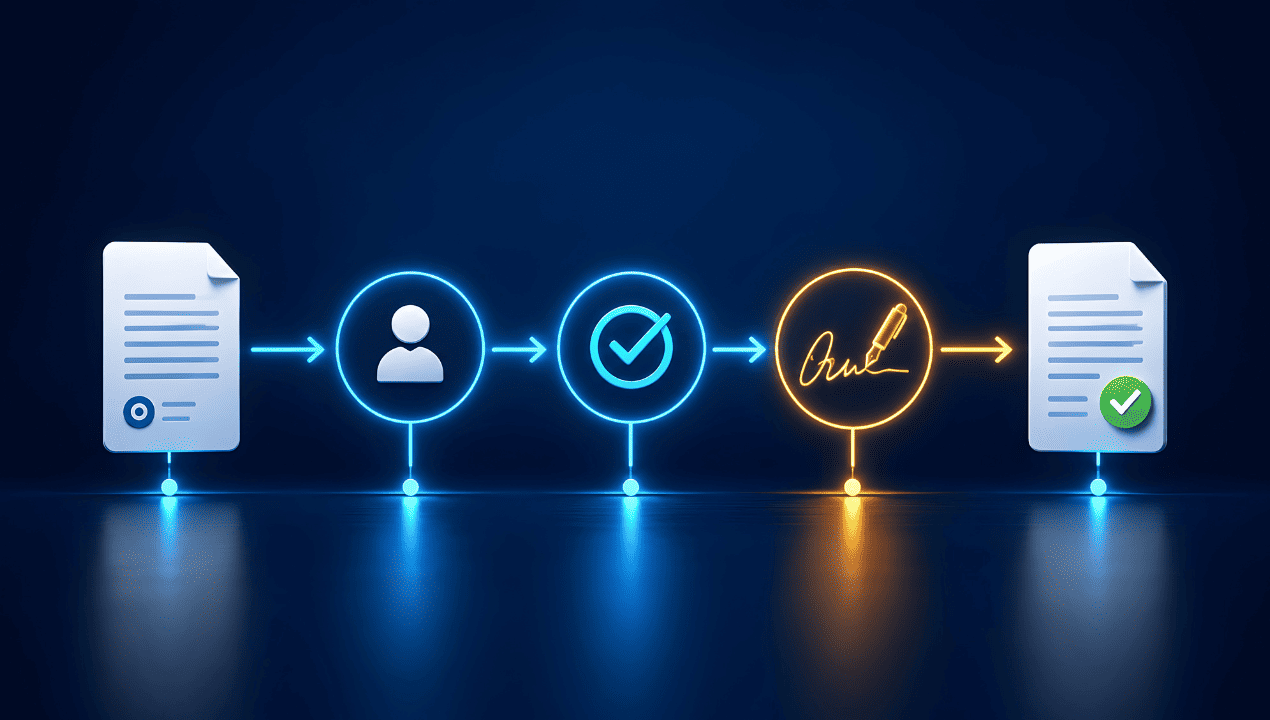
The process generally looks like this.
Step 1: Google Receives the Report
You flag the review through your Business Profile or Google's Reviews Management Tool and select the reason for reporting it.
Google then evaluates the review against its content policies.
Step 2: The Review Is Evaluated
Google reviews the reported content to determine whether it violates policy. This is where evidence matters.
Google's policies prohibit fake engagement, rating manipulation, misleading content, conflicts of interest, and other forms of prohibited activity.
Step 3: Google Makes a Decision
There are two basic outcomes.
If Google determines that the review violates its policies, it can be removed.
If Google determines that the content does not violate its policies, the review can remain published.
That is why how to report fake Google reviews is only one part of the process. The quality of the report and the underlying evidence matter just as much.
How Long Does Google Take to Remove a Fake Review?
This is where businesses often encounter misleading advice.
There is no universal 24-hour, 48-hour, or seven-day Google removal guarantee.
Google's own Business Profile documentation says review evaluation typically takes several days. It also provides a Reviews Management Tool where businesses can check the status of a report.
That makes the most accurate review removal timeline:
Report submitted → Google evaluates the review → Google determines whether there is a policy violation → removal or rejection.
The actual timeframe can vary.
The nature of the suspected violation, the available evidence, the review itself, and Google's evaluation process can all affect how quickly a decision is reached.
A business should therefore treat "several days" as Google's published general guidance, not as a guaranteed deadline.
What the Timeline Can Look Like
| Stage | What happens |
|---|---|
| Report submitted | Google receives the flag |
| Evaluation | Google assesses the content against its policies |
| Policy violation found | The review may be removed |
| No violation found | The review can remain visible |
| Rejected report | An eligible case may be appealed |
The important point is simple: reporting is not removal.
The report starts an evaluation. The policy decision determines the outcome.
What If Google Says the Review Doesn't Violate Its Policies?
A rejected report does not necessarily mean you have no options.
Google provides an appeal process for eligible content and policy enforcement decisions. The available process depends on the type of enforcement involved.
Before appealing, revisit the reason for the original report.
Was the problem actually a policy violation?
Can the suspected connection between the reviewer and the business be documented?
Does the content show evidence of fake engagement, rating manipulation, or another prohibited behavior?
An effective appeal should be specific rather than emotional.
Screenshots, customer records, dates, reviewer activity, and other relevant documentation can help establish why the content should be reconsidered.
Do not submit repeated reports simply because the first one failed. Build the case around the applicable policy.
What to Do While the Fake Review Is Still Live
Waiting for a decision does not mean leaving your reputation unattended. If you are dealing with a potentially fraudulent review, preserve the evidence immediately.
Take screenshots of the review and reviewer profile. Record the date it appeared. Document relevant customer records and note any unusual pattern involving other reviews.
Then consider a professional response.
The response is not primarily for the reviewer. It is for every potential customer who sees the complaint while it remains visible.
Keep it calm.
Do not accuse the reviewer of criminal conduct without a defensible basis. Do not reveal private customer information. Do not turn the response into an argument.
A concise response can acknowledge the concern while making clear that the business cannot identify the stated interaction.
This protects the customer-facing side of your reputation while the removal process continues.
If the goal is to strengthen the overall rating while a questionable review is being evaluated, the right approach is to build a consistent, policy-compliant review acquisition process. See How to Get More Reviews on Google Business Profile (Without Breaking the Rules) for the proper approach.
When Should You Escalate a Fake Review Case?
Escalation becomes more relevant when the problem goes beyond one questionable review.
Consider taking a closer look when:
- Several fake Google reviews appear together.
- Multiple accounts show suspicious patterns.
- A competitor appears connected to the activity.
- A review remains despite strong evidence of a policy violation.
- The attack is affecting conversions, visibility, or customer trust.
When a review goes beyond a policy violation and contains potentially false statements that cause serious harm, the issue can become a legal question as well. See The Legal Line: When a Bad Review Crosses Into Defamation for where that line can fall.
Google's policies specifically prohibit coordinated attempts to manipulate ratings and content that does not represent genuine customer experiences.
The FTC also treats fake or false consumer reviews as a serious issue. Its Reviews and Testimonials Rule addresses deceptive practices involving fake reviews, including reviews that misrepresent that the reviewer exists or had actual experience with the business. The rule took effect on October 21, 2024.
That does not mean every suspicious Google review is an FTC matter.
It does mean businesses should treat organized review manipulation as more than an ordinary customer-service complaint.
Businesses should also avoid trying to manipulate the review mix while dealing with an attack. For the rules around selectively soliciting positive feedback, see Is Review Gating Legal? What the FTC Actually Says.
The Real Answer About the Review Removal Timeline
The most reliable answer is also the least sensational:
There is no guaranteed review removal timeline.
Google says review evaluation typically takes several days. Some reports result in removal. Others do not. Eligible cases may have an appeal route.
The right approach is to report the content accurately, preserve evidence, monitor the case, appeal when appropriate, and manage the customer-facing impact while the review remains visible.
That is far more effective than repeatedly clicking "Report."
Frequently Asked Questions
1. Can Google remove fake reviews without a report?
Ans: Yes, Google can identify and remove policy-violating content through its own systems and reviews. Google states that it identifies and removes fake or biased content and rating manipulation.
2. Does reporting a fake review guarantee removal?
Ans: No. Reporting triggers an evaluation. Google removes the review when it determines that the content violates its policies.
3. What happens when you report fake reviews on Google?
Ans: The reviews enter Google's evaluation process where it (Google) assesses reviews against its policies and then either removes the content or leaves it published.
4. Can you appeal if Google refuses to remove a fake review?
Ans: An appeal may be available for eligible cases. Google provides appeal processes for certain Maps content and policy enforcement decisions.
5. Should you respond while waiting for removal?
Ans: Usually, yes, when the review is visible and could influence potential customers. Keep the response factual, professional, and free of confidential information.
Need Help Managing a Fake Review Attack?
A suspicious review can become more complicated when several reviews appear together or the evidence is difficult to organize.
ReputationTeam can help businesses assess questionable reviews, document potential violations, manage review responses, and determine the appropriate next step.
For businesses dealing with a bigger reputation problem, a professional review removal assessment can help separate legitimate complaints from content that may actually violate platform policies.
Start with the Free Reputation Analyzer to see where your online reputation needs attention.
Need help with your reputation?
Get a free, no-obligation reputation analysis from our team.
Get a Free Quote